FTC Team Reflection: 2025–2026 DECODE Season
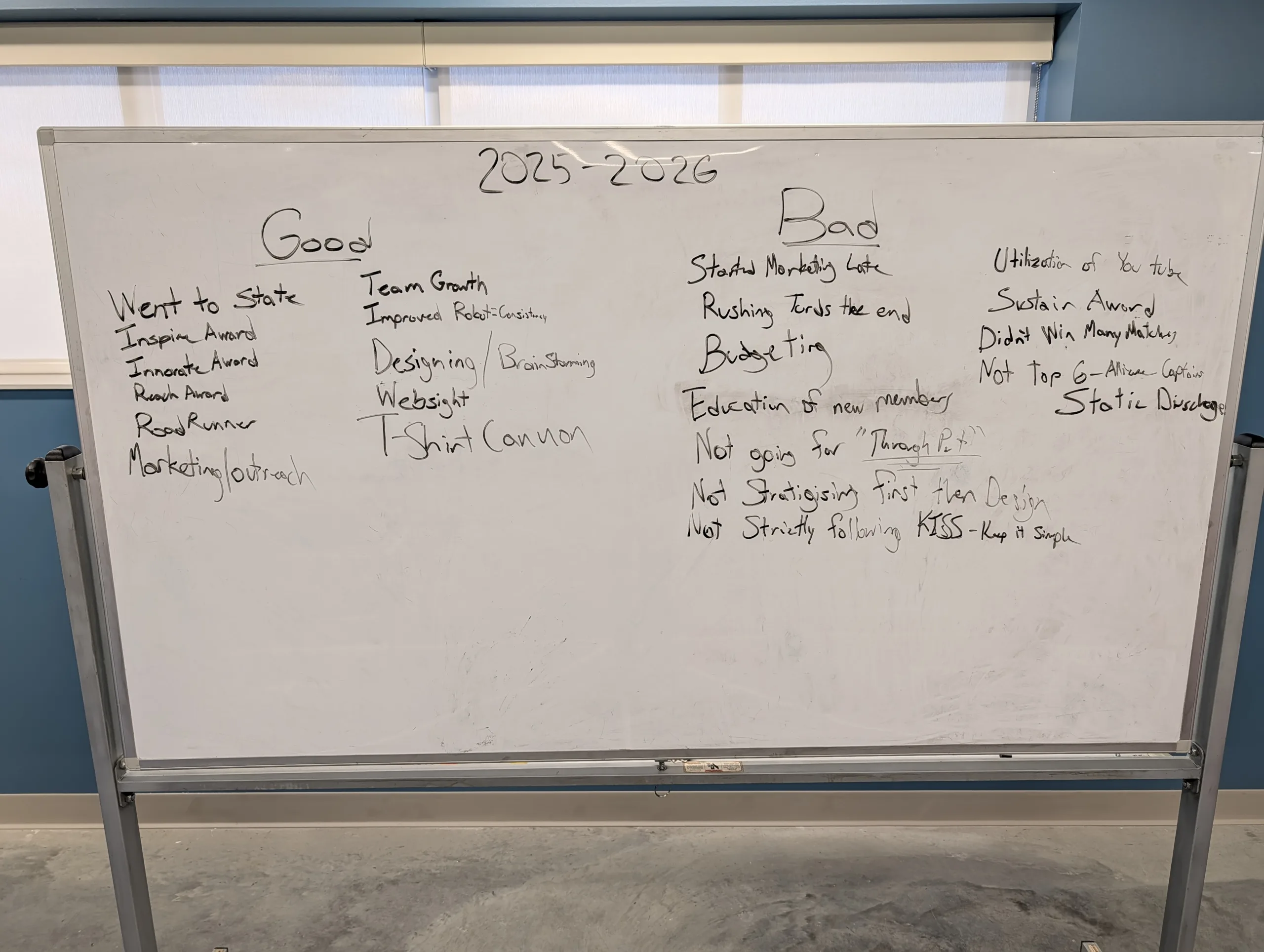
As the 2025–2026 DECODE season comes to an end, it is important for us to reflect on our progress, accomplishments, and areas for improvement. We categorized our season into two main areas: “Good” and “Bad.”
✅ What Went Well
At the beginning of the season, our primary goal was simple: qualify for the State Championship.
We are proud to say that we achieved that goal—and went even further by earning the Innovate Award at the state level. In addition, during qualifiers, we also received both the Inspire Award and the Reach Award, highlighting our performance across multiple aspects of the program.
One of the most significant improvements this season was team growth. We expanded from 4 members to 9 members, and from 1 coach to 3 coaches, allowing for more collaboration, support, and specialization within the team.
On the technical side, we made clear progress in our robot’s consistency and scoring ability. Our total points increased compared to previous seasons, and we improved our brainstorming and design process, leading to more structured and intentional engineering decisions.
A major milestone this year was the creation of our team website, which allows us to document our progress, share our journey, and connect with a broader audience. This directly ties into another key success: Outreach and Marketing.
We established a dedicated marketing team, responsible for producing:
- Our engineering portfolio
- Our trifold display
- Budget planning and investment decisions (such as team materials like stress balls)
- Research on effective resource use
This group also helped strengthen our team’s Gracious Professionalism, ensuring that how we present ourselves matches the values of FTC.
In addition, the marketing team improved our judging process by creating a structured script. This helped us clearly communicate our strengths, including projects like the T-shirt cannon we built over the summer.
Our outreach efforts were especially impactful this year. Through a combination of live TV appearances and school outreach, we reached an estimated 1.8 million people, significantly expanding our visibility and influence.
❌ Areas for Improvement
While the season had many successes, there are several areas where we fell short and can improve moving forward.
One key issue was timing and organization. The marketing team was only established after our first competition, which limited its effectiveness early in the season. Additionally, we struggled with procrastination, which led to rushing critical work toward the end of the season.
Another challenge was budget transparency. Our budget was managed directly by WACO rather than by our team, which made it difficult to track spending and make fully informed financial decisions.
The most significant area for improvement was new member education and onboarding. Many new members finished the season with only a limited understanding of FTC, the robot, and how the team operates. This is especially important, as it directly relates to the purpose of the Sustainability Award, which emphasizes long-term team growth and knowledge transfer.
Our marketing execution, specifically on YouTube, also needs improvement. We posted only a few videos, and most were unedited, limiting their effectiveness and professionalism.
From a competitive standpoint, our lack of deep understanding in both FTC gameplay strategy and robot design impacted our performance. As a result:
- We did not win many matches overall
- We were never ranked in the top 6
- We were not selected as an alliance captain
A major reason for this was that we did not prioritize throughput and game strategy early enough. We began designing before fully analyzing the game, which led to less effective solutions.
Additionally, during the engineering process, we did not consistently follow the KISS principle (Keep It Simple, Stupid). Instead of focusing on the most efficient and strategic ways to score points, we sometimes overcomplicated our designs.
🔧 Key Takeaways Moving Forward
- Study and analyze the game before designing the robot
- Prioritize simple, effective solutions over complex ones
- Improve new member education and knowledge transfer
- Establish teams (like marketing) earlier in the season
- Maintain better time management and avoid procrastination
- Increase content quality and consistency, especially online
- Focus on strategy and throughput to improve match performance


No responses yet